
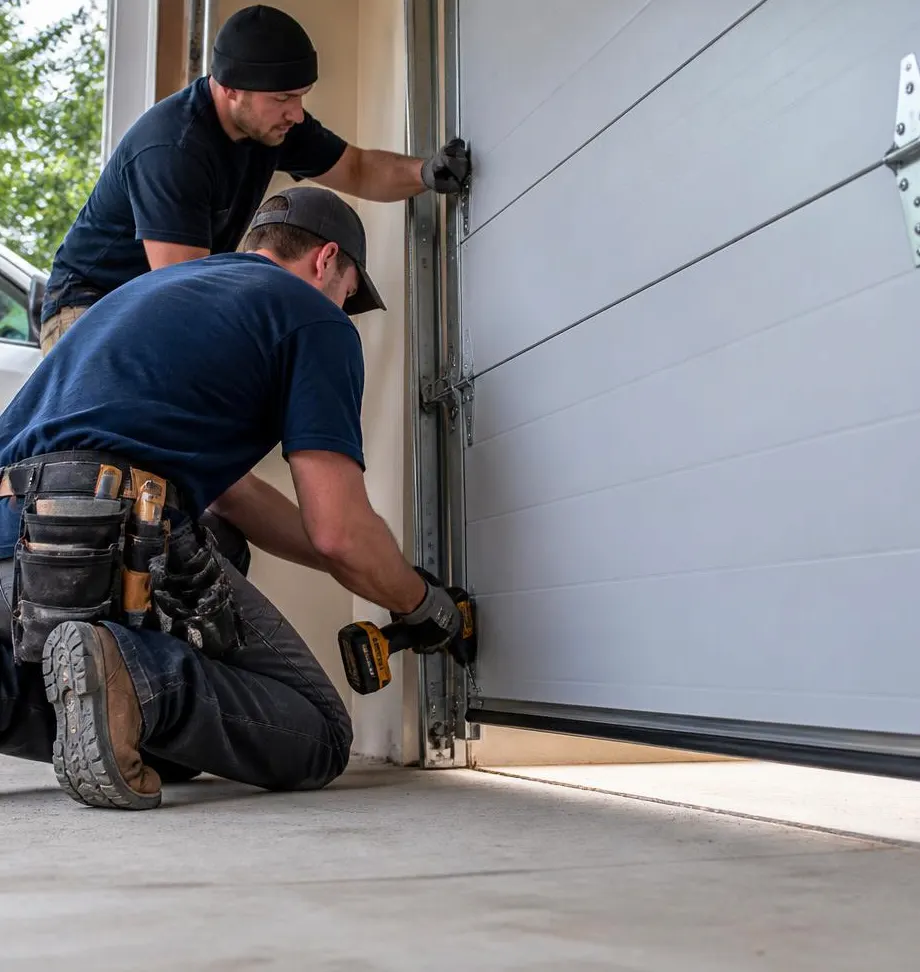
Getting your garage door ready for winter means doing four things before the first hard freeze or ice storm: replace worn weatherstripping, lubricate every moving part, check the springs and cables for rust or wear, and make sure your opener has a battery backup. None of this takes a full day, but skipping it is how homeowners in Lincoln County end up with a frozen, jammed, or dead door right when a storm rolls through.
Why Fall Prep Matters More Here Than You'd Think
Winter around Lake Norman isn't brutal the way it is further north, but it's unpredictable. You'll get mild stretches, sudden ice storms, and cold snaps that follow months of heavy humidity and rain. That combination is rough on garage door hardware. Steel springs and tracks that have spent all summer absorbing moisture from humid air are already primed for rust by the time temperatures drop. Add a quick freeze on top of that, and small weaknesses turn into real failures fast.
Attached garages in this area also deal with pine sap, needles, and pollen buildup from the trees that shade most properties here. That debris works its way into tracks and rollers through fall, and once cold weather stiffens the grease in those parts, a dirty track becomes a stuck door.
Check and Replace Weatherstripping
The rubber seal along the bottom of your door and the strips along the sides take a beating from months of rain and UV exposure. By October, cracked or flattened weatherstripping is common, and it's the main reason cold air, water, and even small pests get into the garage.
- Run your hand along the bottom seal — if it's stiff, cracked, or doesn't spring back, replace it.
- Check the side and top seals for gaps where daylight shows through.
- If your garage connects to living space, a bad seal lets cold, damp air in and can make that room noticeably colder.
Weatherstripping is one of the cheapest fixes on this list and one of the most noticeable once it's done.
Lubricate Before the Cold Sets In
Grease thickens as temperatures drop, and whatever lubricant is left on your rollers, hinges, and tracks from summer is probably gone or gummed up with pollen and dust. Use a silicone-based garage door lubricant (not WD-40, which evaporates too fast) on:
- Roller bearings
- Hinges
- The springs themselves
- The track where rollers ride
A well-lubricated door moves smoother, runs quieter, and puts less strain on the opener motor when a cold morning makes everything a little stiffer than usual.
Inspect Springs and Cables for Rust
This is the step homeowners skip most often, and it's the one that matters most. Months of humid air followed by a quick cold snap is exactly the kind of cycle that accelerates rust on torsion springs and cables. Rust doesn't just look bad — it weakens the metal and makes a sudden snap more likely, usually on the coldest day of the year when the door is working hardest.
Look for:
- Orange or flaking rust on the spring coils
- Fraying strands on the lift cables
- Visible gaps or stretching in the spring coils when the door is down
If you see any of this, don't try to adjust or replace the spring yourself. Torsion springs are under heavy tension and have caused serious injuries even to experienced DIYers. This is a job to hand off.
Plan for Power Outages
Ice storms and the remnants of tropical systems that move inland both have a habit of knocking out power in this area, sometimes for hours. If your opener doesn't have a battery backup, an outage means your garage door is stuck wherever it was when the power went out — which is a real problem if that's open, or if you need to get a vehicle out for an emergency.
Most modern openers offer battery backup either built in or as an add-on. If yours doesn't, now is the time to look into it, before a storm makes the decision for you.
Clear Tracks and Check the Auto-Reverse
Pine needles, leaves, and pollen residue build up in tracks all fall. Wipe the tracks down and check that rollers move freely without catching on debris. While you're at it, test the auto-reverse safety feature: place a block of wood or a paper towel roll in the door's path and close it. The door should reverse immediately on contact. If it doesn't, that's not a winter-specific problem, but it's one you want fixed before a kid, pet, or car ends up under a door that doesn't stop.
Seal Gaps Around the Opener and Panels
If your garage has an older door or panels that have shifted slightly over time, cold air can find its way through small gaps around the frame. This matters more if the garage shares a wall with living space or houses equipment sensitive to temperature swings, like a water heater or freezer. A bead of weatherproof sealant around visible gaps is a quick fix that pays off all winter.
When to Call Denver Garage Door Pro
If you spot rust on your springs or cables, hear new grinding or popping noises after lubricating, or your opener doesn't have reliable backup power heading into storm season, it's worth having it looked at before winter rather than during an ice event. Denver Garage Door Pro offers full Garage Door Maintenance tune-ups that cover spring inspection, track alignment, lubrication, and safety testing in one visit, and if a spring does need replacing, we handle Spring Replacement with the right tools and tension equipment so it's done safely the first time.
If you're in Denver, Mooresville, Lincolnton, Huntersville, Cornelius, Davidson, Sherrills Ford, or Iron Station and want your garage door checked before the next cold snap or ice storm rolls through, give Denver Garage Door Pro a call. We'll get it sorted before winter makes the decision for you.