
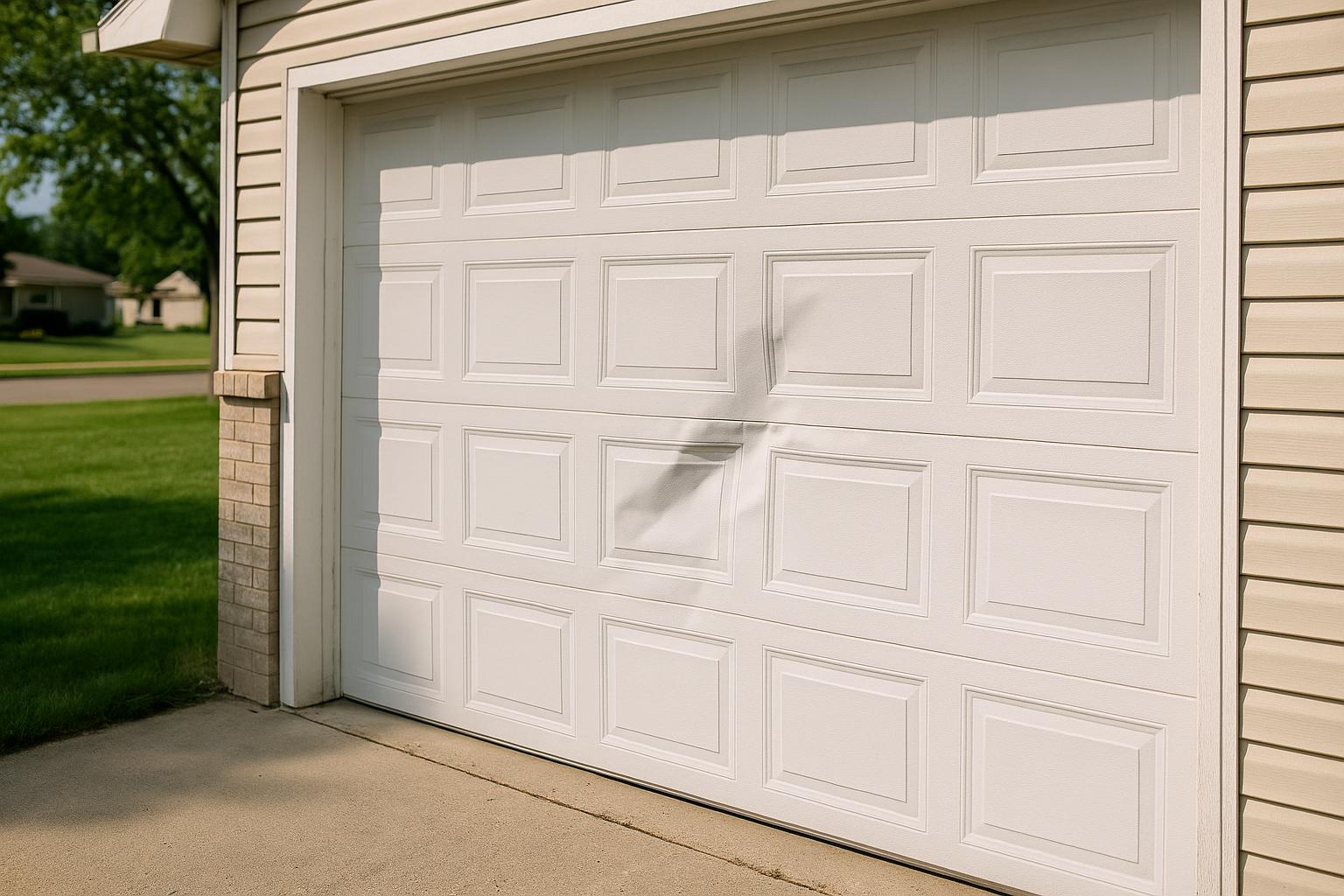
That One Damaged Panel Is Bugging You — Now What?
Maybe a basketball hit it at just the wrong angle. Maybe you misjudged the distance while backing out of the driveway. Or maybe years of North Carolina humidity and sun exposure have left one section of your garage door warped, cracked, or dented beyond what you can ignore. Whatever the cause, you're now staring at a damaged garage door panel and wondering: Do I really need to replace the entire door, or can I just fix this one section?
It's a question we hear all the time from homeowners here in Denver. And the answer isn't always straightforward. Several factors come into play — the age of your door, the extent of the damage, whether replacement panels are still available, and your long-term plans for the home. Let's walk through everything you need to consider so you can make a confident decision.
How Garage Door Panels Work
Most residential garage doors are made up of four or five horizontal sections, or panels, connected by hinges. These panels work together as a system, rolling along tracks guided by rollers as the door opens and closes. Each panel contributes to the structural integrity of the door, which means even a single damaged section can affect how the whole door operates.
Panels are typically made from steel, aluminum, wood, or composite materials. Some are insulated, and many feature decorative details or window inserts. The specific construction of your panels matters when it comes to finding a match for replacement.
When Replacing a Single Panel Makes Sense
In many cases, replacing just the damaged panel is the most practical and cost-effective solution. Here are the situations where a single-panel replacement is usually the right call:
- The damage is isolated to one section. If only one panel is dented, cracked, or bent and the rest of the door is in good shape, there's no reason to replace everything.
- Your door is relatively new. If your garage door is less than 10 years old, the manufacturer likely still produces matching panels. This makes it easy to swap out the damaged section without any visual mismatch.
- The door's hardware is in good condition. If your springs, tracks, rollers, and opener are all functioning properly, replacing a single panel lets you keep the system that's already working well.
- You're working within a tight budget. A single panel replacement typically costs a fraction of a full door installation, making it an attractive option when finances are a concern.
When a Full Door Replacement Is the Better Investment
Sometimes, replacing just one panel isn't worth it — or isn't even possible. Here's when you should consider replacing the entire garage door:
- Your door is old or discontinued. If your garage door model has been discontinued, finding an exact replacement panel can be difficult or impossible. Even if you find something close, differences in color, texture, or dimensions can make the repair look obvious and reduce your home's curb appeal.
- Multiple panels are damaged. When two or more panels need replacing, the cost starts approaching what you'd pay for a new door. At that point, a full replacement gives you a fresh warranty, updated insulation, and a consistent appearance.
- The door has structural issues. If the damage has caused the door to sit unevenly in the tracks, bind during operation, or put extra stress on the springs and opener, patching one panel won't solve the underlying problem.
- You're planning to sell your home. A new garage door is consistently ranked as one of the highest-ROI home improvement projects. If you're getting ready to list your Denver home, a full replacement can boost curb appeal and attract buyers around the Lake Norman area who expect move-in-ready properties.
- Energy efficiency matters to you. Older garage doors often lack proper insulation. If you're already spending money on a repair, upgrading to an insulated door can help regulate your garage's temperature — something that makes a real difference during our hot Carolina summers and chilly winter mornings.
The Color Matching Challenge
One factor that catches many homeowners off guard is color matching. Even if you find the correct panel model, a new panel installed next to sections that have been exposed to years of UV rays and weather will look noticeably different. The new panel will be brighter and cleaner, while the existing panels may have faded or yellowed.
In some cases, you can repaint the entire door to create a uniform look. But if your door has a factory-applied finish or textured surface, painting may not produce the results you're hoping for. This is worth discussing with your technician before committing to a single-panel replacement.
Can You Replace a Garage Door Panel Yourself?
We understand the DIY temptation, but garage door panel replacement is one of those jobs that's best left to professionals. Here's why:
- The door is under spring tension. Your garage door springs hold an enormous amount of force. Removing and reinstalling panels without properly managing that tension can result in serious injury.
- Alignment is critical. A panel that's even slightly misaligned can cause the door to bind, jump the tracks, or put uneven stress on the opener — leading to more expensive repairs down the road.
- Warranty considerations. Many garage door warranties are voided if repairs aren't performed by a qualified technician. A professional installation protects your investment.
What to Expect During a Panel Replacement
If you decide to go the single-panel route, here's what the process typically looks like:
- Assessment: A technician inspects the damage and checks the rest of the door's components to make sure a panel swap will actually solve the problem.
- Panel sourcing: The correct replacement panel is ordered from the manufacturer. Depending on availability, this can take anywhere from a few days to a couple of weeks.
- Installation: The damaged panel is carefully removed, the new one is installed, and the door is tested for proper balance and alignment.
- Final check: The technician verifies that the door opens and closes smoothly, the safety sensors are working, and everything is secure.
Making the Right Call for Your Home
There's no universal answer to the panel-versus-door question. It depends on your specific situation — the age and condition of your door, the availability of matching parts, your budget, and your goals for the property.
What we always tell homeowners in Denver is this: get a professional opinion before spending any money. A quick inspection can reveal whether a panel replacement will hold up long-term or whether you'd be better off investing in a new door that will serve you for decades.
At Denver Garage Door Pro, we've handled countless panel replacements and full installations throughout the Lake Norman area. We'll give you an honest assessment, walk you through your options, and help you choose the solution that makes the most sense — not the one that costs the most. If you've got a damaged panel that needs attention, give us a call and let's figure out the best path forward together.