
That Grinding, Squealing, or Rattling Isn't Normal
If you've lived in your Denver home long enough, you've probably gotten used to the sounds your garage door makes every morning and evening. But there's a big difference between the normal hum of a well-maintained door and the grinding, popping, squealing, or rattling that signals a developing problem.
A noisy garage door is one of the most common complaints we hear from homeowners around the Lake Norman area. The good news is that most garage door noises point to specific, identifiable issues — and catching them early can save you from a costly breakdown or a door that stops working altogether.
Let's break down the most common garage door sounds, what they mean, and what you should do about each one.
Grinding or Scraping Sounds
A harsh grinding or scraping noise when your garage door opens or closes usually means metal is rubbing against metal somewhere it shouldn't be. The most common culprits include:
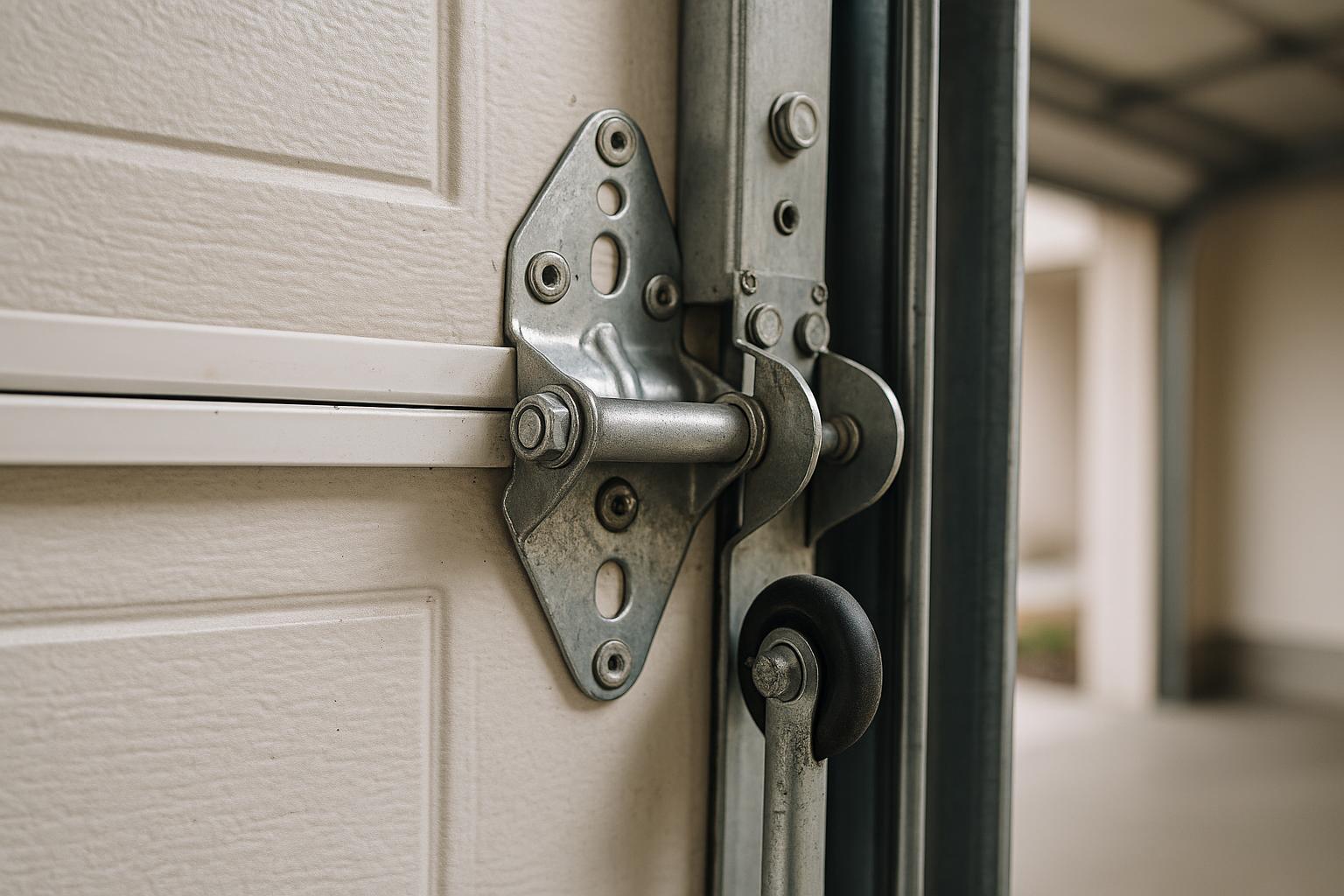
- Worn rollers: Steel rollers wear down over time and can start grinding against the track. Nylon rollers are quieter and last longer, and upgrading is a relatively simple fix.
- Misaligned tracks: If the vertical or horizontal tracks have shifted even slightly, the door can scrape against them as it moves. This puts extra stress on the entire system and should be addressed quickly.
- Dry bearings: The bearings in your rollers, hinges, and pulleys need periodic lubrication. Without it, they grind and wear out faster than they should.
If you hear grinding, take a look at your rollers and tracks. Visible wear, metal shavings, or obvious misalignment are signs it's time for a professional inspection.
Squealing or Screeching
A high-pitched squeal or screech is hard to ignore — and your neighbors in Denver probably aren't thrilled about it either. This sound typically comes from:
- Lack of lubrication: This is the number one cause of squealing garage doors. The springs, hinges, rollers, and bearing plates all need to be lubricated regularly with a garage door-specific lubricant (not WD-40, which is a solvent, not a long-term lubricant).
- Torsion spring tension: Springs under high tension can produce a squealing sound, especially as they age. If the noise is coming from the area above your door where the springs are mounted, don't attempt to adjust them yourself — torsion springs are under extreme pressure and can cause serious injury.
- Worn weather stripping: Sometimes the rubber seal along the bottom or sides of the door dries out and creates a squealing friction sound as the door moves. This is an easy and inexpensive replacement.
Rattling or Vibrating
A rattling garage door often sounds worse than it is, but it still deserves attention. Common causes include:
- Loose hardware: Over hundreds of open-and-close cycles, the nuts, bolts, and screws that hold your garage door system together can loosen. A simple tightening with a socket wrench can often eliminate the rattle.
- Loose chain or belt on the opener: If your garage door opener uses a chain drive, a loose chain will slap and rattle during operation. Belt-drive openers are generally quieter, but belts can also loosen over time.
- Vibrating opener mount: The bracket that attaches your opener to the ceiling can transfer vibrations through your garage and into your home. Anti-vibration pads or a proper re-mounting can solve this.
We recommend homeowners around Mooresville, Huntersville, and the greater Denver area do a quick visual and audio check of their garage door hardware at least twice a year.
Popping or Banging
A loud pop or bang when the door starts moving is one of the more alarming sounds you can hear. It often points to:
- Torsion spring issues: A single loud bang — especially if the door suddenly won't open — often means a spring has broken. This is the most common emergency garage door call we get, and it requires professional repair.
- Panel or section problems: If a panel is warped, cracked, or coming loose from the hinges, it can pop or bang as the door flexes during movement.
- Track obstructions: Small debris, a misplaced tool, or even built-up grime in the tracks can cause the rollers to pop as they pass over the obstruction.
A single dramatic bang followed by a door that won't move almost always means a broken spring. Do not try to operate the door manually or with the opener — call a professional right away.
Humming Without Movement
If you press your garage door opener button and hear a hum but the door doesn't move, the motor is running but something is preventing it from doing its job. This could be:
- A stripped gear inside the opener: The nylon gears inside many residential openers wear out over time and eventually strip, meaning the motor spins but doesn't engage the drive mechanism.
- A broken spring: Without functioning springs to counterbalance the door's weight, the opener motor simply can't lift it. The door may be too heavy for the opener to handle alone.
- A disconnect switch that's been engaged: Check whether the manual release cord has been pulled, disconnecting the door from the opener carriage. This is a simple fix that homeowners sometimes overlook.
What You Can Do at Home
Not every noisy garage door requires a service call. Here are a few things Denver homeowners can safely do on their own:
- Lubricate moving parts: Apply a silicone-based or lithium-based garage door lubricant to the springs, hinges, rollers, and bearing plates every six months.
- Tighten loose hardware: Use a socket wrench to snug up any loose bolts on the track brackets, hinges, and opener mounting hardware.
- Inspect the tracks: Look for visible bends, gaps between the track and the wall, or debris that could be causing problems.
- Listen and observe: Pay attention to when the noise happens — during opening, closing, or both — and where it seems to come from. This information helps a technician diagnose the issue faster if you do need to call for service.
When to Call a Professional
Some garage door repairs are straightforward, but others involve components under extreme tension or complex mechanical systems that can be dangerous to work on without training. You should call a professional if:
- The noise involves the torsion springs or cables
- The door is visibly off-track or sagging on one side
- You hear a loud bang and the door stops working
- The opener motor runs but the door doesn't move
- You've lubricated and tightened everything but the noise persists
At Denver Garage Door Pro, we help homeowners across Denver, Cornelius, Davidson, and Lincolnton diagnose and fix noisy garage doors every week. Whether it's a simple lubrication issue or a full roller and track replacement, we'll figure out what's making the noise and take care of it.
Don't Ignore the Warning Signs
Your garage door is one of the largest moving parts of your home, and it works hard — cycling up and down over a thousand times a year in most households. A little noise might seem minor, but it's often the first sign of a part that's wearing out. Addressing it early means a simpler repair, a lower cost, and a garage door that keeps working reliably when you need it to.
If your garage door has started making sounds that don't seem right, give us a call. We'll take a look, let you know what's going on, and get it quiet again.