
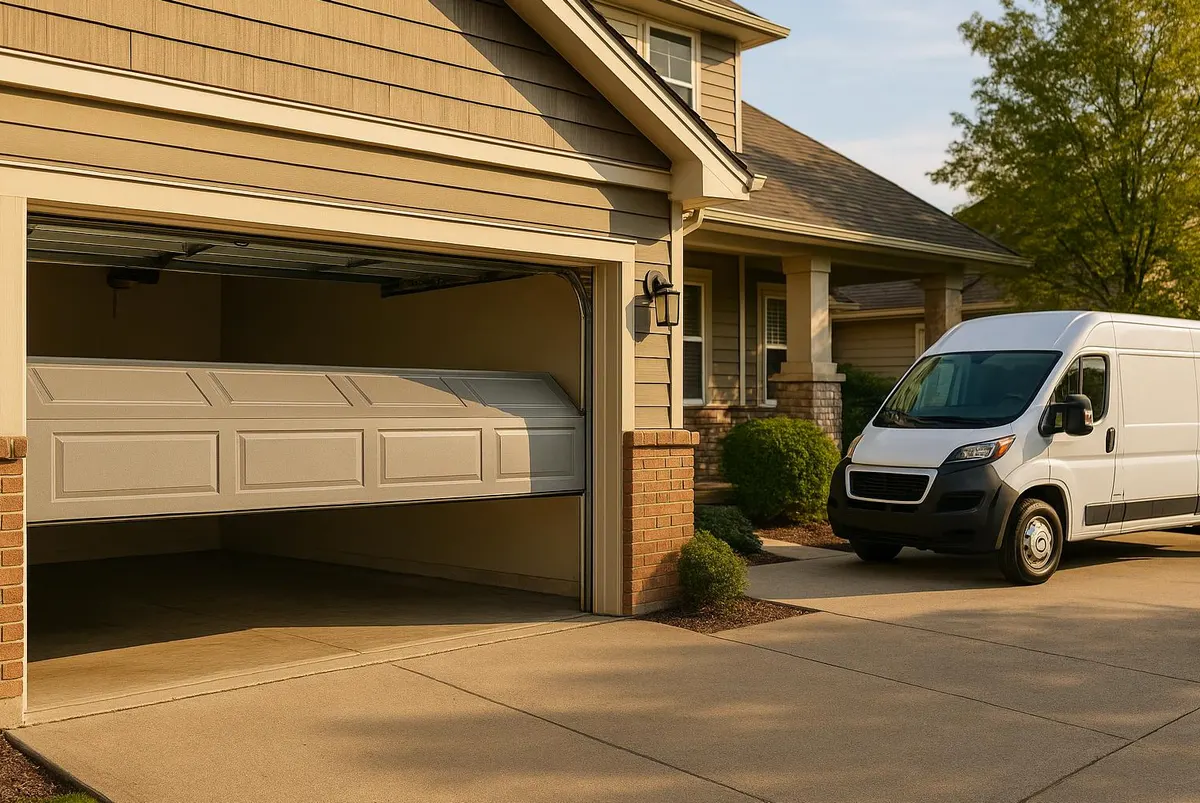
The Mistake Almost Everyone Makes First
You hear a squeak, you grab the can of WD-40 sitting on the shelf, and you spray down every moving part on the door. It's an easy mistake to make — WD-40 is already in most garages, it's cheap, and the name practically promises a fix. The problem is that WD-40 is a water displacer and light solvent, not a lubricant. It strips old grease and grime off metal, which can quiet things down for a day or two, but it evaporates fast and leaves parts drier than before. In Denver's humid summers and damp, rainy falls, that dried-out metal picks up moisture again almost immediately, and the squeak comes right back — sometimes worse, because you've washed away whatever lubrication was left.
Tools and Products You'll Need
- A silicone-based or lithium-based garage door lubricant (sold specifically for garage doors)
- A clean rag or shop towel
- A small stiff brush (an old toothbrush works)
- Mild soap and water for cleaning rollers and tracks
- A step stool or short ladder
- Work gloves
Step-by-Step: How to Lubricate Your Garage Door
- Disconnect the opener and close the door manually. Pull the release cord so you can move the door by hand without the motor engaging. This keeps your hands clear of moving parts.
- Wipe down the tracks first — don't lubricate them. Tracks should stay dry and clean. Use a damp rag to remove dust, pollen residue, and pine sap buildup, which is common around garages shaded by trees in this area. Lubricant on the tracks attracts more dirt and can make the rollers slip.
- Lubricate the hinges. Apply a light coat of silicone or lithium spray to each hinge where the panels pivot. Work the door up and down a few times to let it soak in.
- Lubricate the rollers. Spray the bearings at the center of each roller, not the wheel surface itself. If you have steel rollers, this step matters most — nylon rollers need less frequent attention.
- Coat the springs lightly. Run a thin layer of lubricant along the torsion spring (the one mounted horizontally above the door) while the door is closed. Don't overdo it — a light film is enough, and excess lubricant here just drips and collects grit.
- Lubricate the top of the opener's chain or screw drive. A few drops along the rail keeps the opener running smoothly and quietly.
- Wipe off excess. Any lubricant left sitting in the open will collect dust and pollen, especially during peak pollen season, so go over everything once more with a dry rag.
- Reconnect the opener and test the door. Run it up and down a few times, listening for any remaining grinding or squeaking that lubrication alone didn't fix.
What to Use — and What to Avoid
Stick with lubricants labeled specifically for garage doors. Silicone-based sprays work well in humid climates because they resist washing out in heavy rain. Lithium grease is a solid choice for springs and hinges that take more wear. Avoid WD-40, standard motor oil, and petroleum-based greases — they either evaporate too quickly or attract dust and pollen, which turns into a gritty paste on the hardware over time.
What a Homeowner Can Safely Handle
Lubricating hinges, rollers, and the opener rail, along with wiping down tracks, is reasonable DIY maintenance for most homeowners. It takes under 30 minutes and should be done roughly every three to four months, with one pass always happening before the first cold snap of the season.
What Needs a Technician
Torsion springs carry serious tension, and if a spring is already showing rust, gaps between coils, or visible wear, lubricating it isn't a fix — it's a stall tactic before a failure. Likewise, if lubrication doesn't quiet a noisy door, the issue is often a bent track, worn roller, or misaligned opener chain, and those require hands-on diagnosis and the right tools to correct safely.
When to Call Denver Garage Door Pro
If you've lubricated everything correctly and the door still grinds, sags, or hesitates, it's worth having it looked at before winter weather makes small problems worse. Denver Garage Door Pro handles full garage door maintenance visits that go beyond what a homeowner can do alone — checking spring tension, roller wear, and track alignment — and we also offer spring replacement for doors showing the wear signs mentioned above. Catching it now, before an ice storm or a cold snap locks things up, is a lot easier than dealing with a stuck door in freezing weather.
If your garage door in Denver, NC needs more than a fresh coat of lubricant, give Denver Garage Door Pro a call — we'll get it running smoothly before winter sets in.