
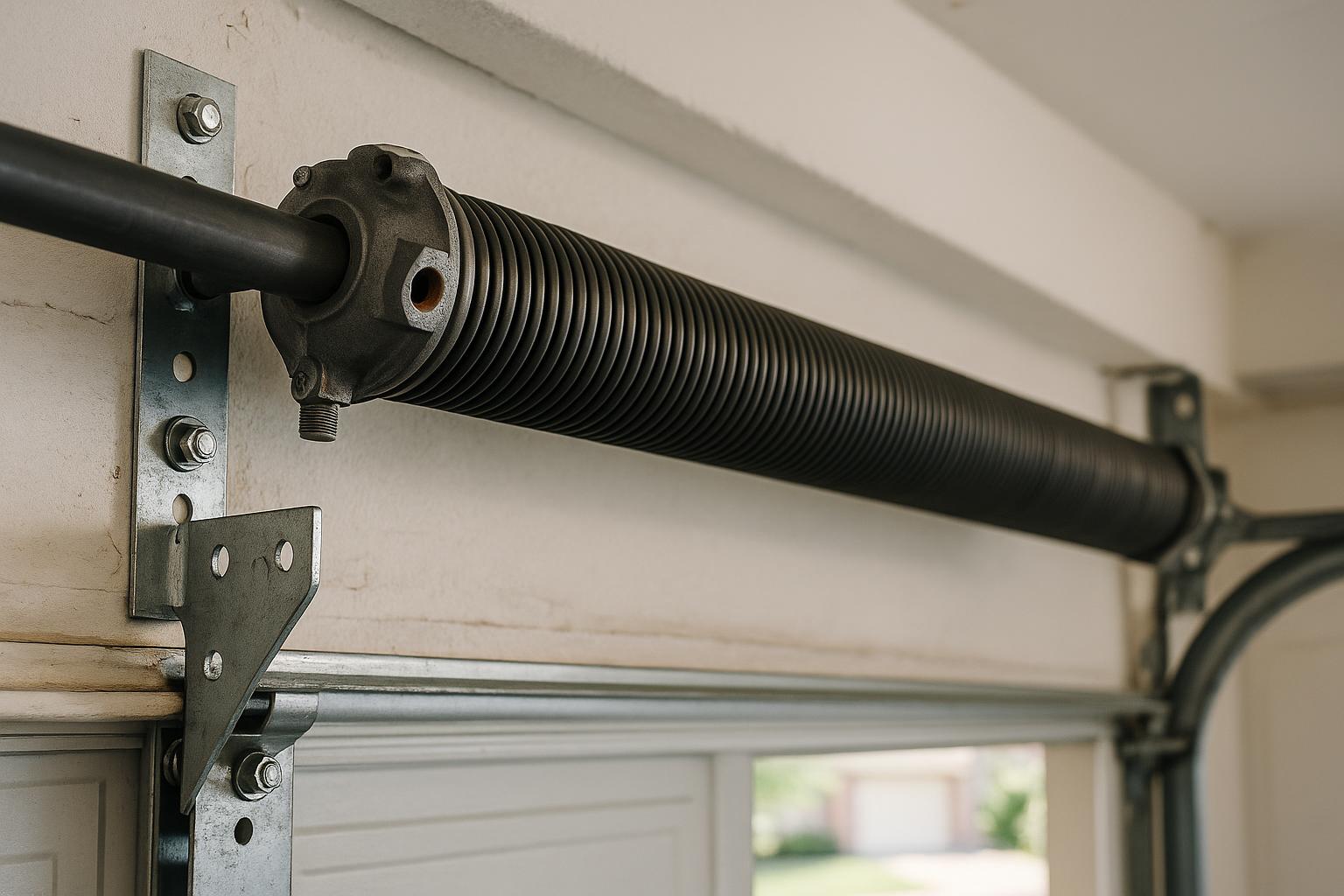
Your Garage Door Springs Are Doing More Work Than You Think
Every time you open and close your garage door, the springs are doing the heavy lifting — literally. A standard two-car garage door can weigh between 150 and 250 pounds, and without properly functioning springs, your opener alone can't handle that load. Springs counterbalance the weight of the door, making it possible to raise and lower it smoothly dozens of times a week.
For homeowners in Denver, NC, where garages often serve as the main entry point to the home, those springs get a serious workout. Between morning commutes, weekend errands around the Lake Norman area, and daily comings and goings, it's easy to rack up thousands of cycles per year without ever thinking about the hardware making it all possible.
So how often should you actually replace your garage door springs? And how do you know when they're on their way out? Let's break it down.
How Long Do Garage Door Springs Typically Last?
The lifespan of a garage door spring is measured in cycles. One cycle equals one full open and one full close of the door. Most standard torsion springs are rated for approximately 10,000 cycles, while high-cycle springs can be rated for 25,000 or even 50,000 cycles.
Here's a rough estimate based on daily usage:
- 2 cycles per day (once out, once in): A standard spring lasts about 13-14 years
- 4 cycles per day (typical for most families): A standard spring lasts about 7 years
- 6-8 cycles per day (busy household, home business): A standard spring may only last 3-5 years
Most homeowners fall somewhere in the 4-6 cycle range, which means springs typically need replacement every 5 to 7 years. But that's just an average — several factors can shorten or extend that timeline.
What Affects the Lifespan of Your Springs?
Temperature Fluctuations
Here in the Denver and Lake Norman area, we experience a full range of seasons. Cold winter mornings cause metal to contract, and hot summer afternoons cause it to expand. This constant cycle of expansion and contraction adds stress to the springs over time, gradually weakening the metal. If your garage isn't insulated, the temperature swings can be even more extreme.
Rust and Corrosion
Moisture is the enemy of garage door springs. Humidity, rain blowing into the garage, and condensation can all contribute to rust formation on the coils. Rust increases friction as the spring operates and eats away at the metal, reducing its structural integrity. A light application of lubricant a few times per year can help slow this process significantly.
Improper Installation or Sizing
If your springs weren't sized correctly for your specific door — whether it's a lightweight single-car door or a heavy insulated two-car door — they'll wear out faster because they're working harder than they were designed to. This is one reason professional installation matters so much.
Lack of Maintenance
Springs that are never lubricated, inspected, or adjusted will almost always fail sooner than springs that receive even basic annual maintenance. A little preventive care goes a long way.
Warning Signs Your Springs Need Replacement
Springs rarely fail without giving some warning signs first. Here's what to watch for:
- The door feels heavier than usual: If your garage door seems difficult to lift manually or your opener is straining, the springs may be losing tension.
- Visible gaps in the spring coils: A healthy torsion spring has tightly wound coils. If you notice a visible gap or separation in the coils, the spring has likely broken.
- The door opens unevenly: If one side of the door rises faster than the other, one of your springs may be weaker or broken, especially on doors with two springs.
- Loud bang from the garage: Many homeowners first discover a broken spring when they hear a loud bang — like a firecracker — coming from the garage. That's the sound of a spring snapping under tension.
- The door won't stay open: If your garage door slides down when you try to leave it partially open, the springs aren't providing enough counterbalance.
- Your opener is struggling: An opener that suddenly sounds louder, moves slower, or stops mid-cycle may be compensating for failing springs.
Can You Replace Garage Door Springs Yourself?
We understand the DIY spirit — it's strong among homeowners in Denver and the surrounding communities. But garage door spring replacement is one job we strongly recommend leaving to a professional. Here's why:
Torsion springs are under extreme tension. A spring rated for a 200-pound door stores an enormous amount of energy. If it's released improperly, it can cause serious injury or even death. Every year, emergency rooms across the country treat injuries from DIY spring replacement attempts gone wrong.
Professional technicians have the specialized tools, training, and experience to safely remove old springs and install new ones. They also ensure the springs are properly sized and calibrated for your specific door, which is critical for safe and balanced operation.
Should You Replace Both Springs at Once?
If your garage door has two torsion springs and only one has broken, you might wonder whether it's worth replacing both. Our recommendation is almost always yes. Here's the reasoning:
- Both springs were installed at the same time, so they've experienced the same number of cycles and wear.
- If one has failed, the other is likely close behind.
- Replacing both at once saves you from paying for a second service call in a few months.
- New springs on both sides ensure even tension and balanced door operation.
It's a small additional investment that saves money and hassle in the long run.
How Regular Maintenance Extends Spring Life
You don't have to just wait for your springs to break. A simple maintenance routine can add years to their lifespan:
- Lubricate the springs with a silicone-based or white lithium spray every 3-4 months. This reduces friction and prevents rust.
- Visually inspect the springs every few months for signs of rust, gaps, or deformation.
- Schedule an annual professional tune-up. A technician can check spring tension, balance the door, and catch small issues before they become big problems.
- Keep your garage as dry as possible. Good ventilation and sealing gaps around the door help reduce moisture exposure.
For homeowners in Denver who use their garage door multiple times a day, these small steps can be the difference between springs lasting five years and springs lasting ten.
When It's Time, We're Here to Help
If your garage door springs are showing signs of wear — or if they've already snapped — don't wait. Operating a garage door with broken or weakened springs puts stress on your opener, creates a safety hazard, and can lead to more expensive repairs down the road.
At Denver Garage Door Pro, we handle spring replacements throughout Denver, Mooresville, Lincolnton, Huntersville, Cornelius, and Davidson. We'll assess your springs, recommend the right replacement for your door, and get the job done safely so you can get back to your routine. If you're not sure whether your springs need attention, give us a call — we're happy to take a look and give you an honest answer.